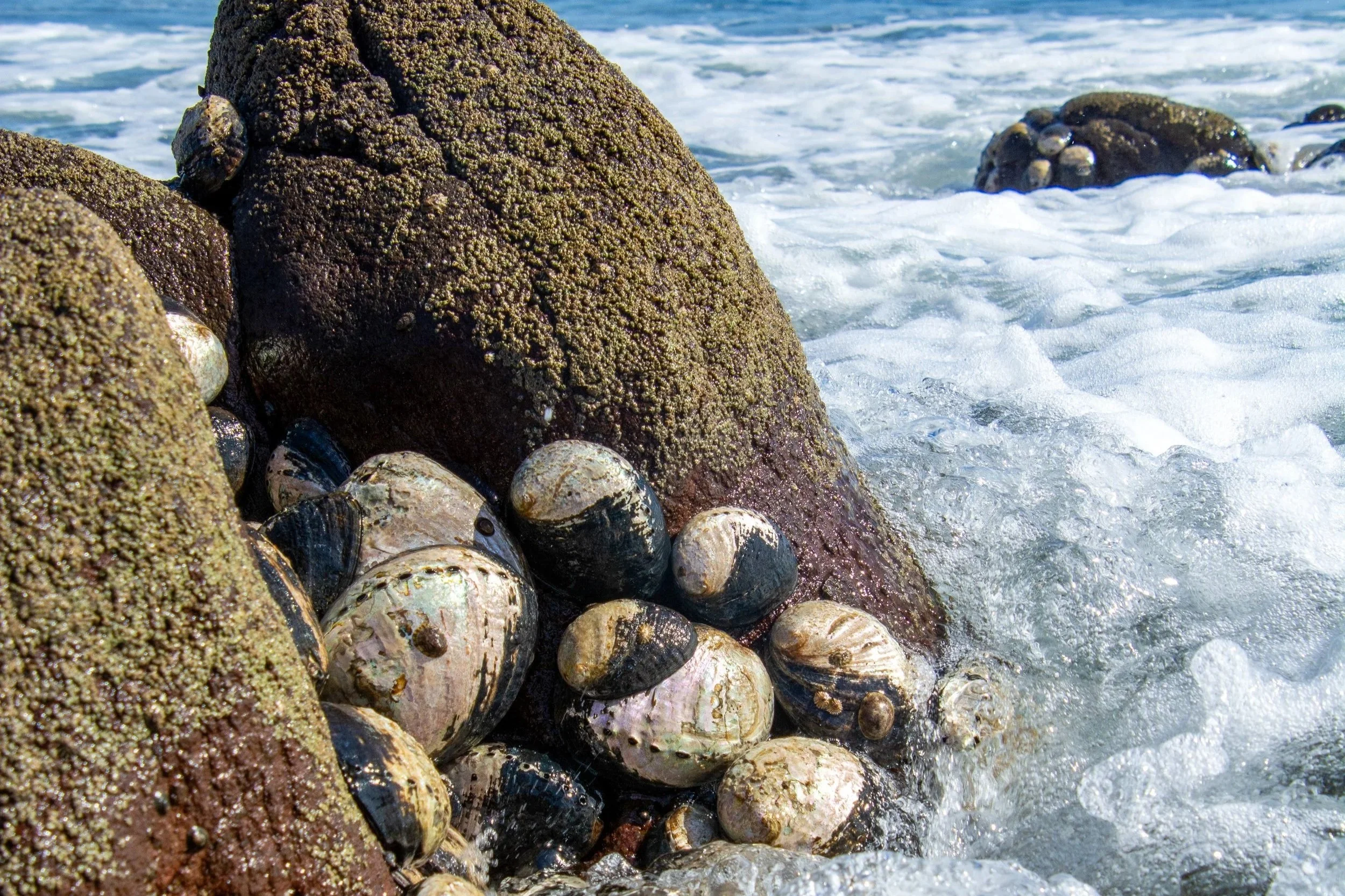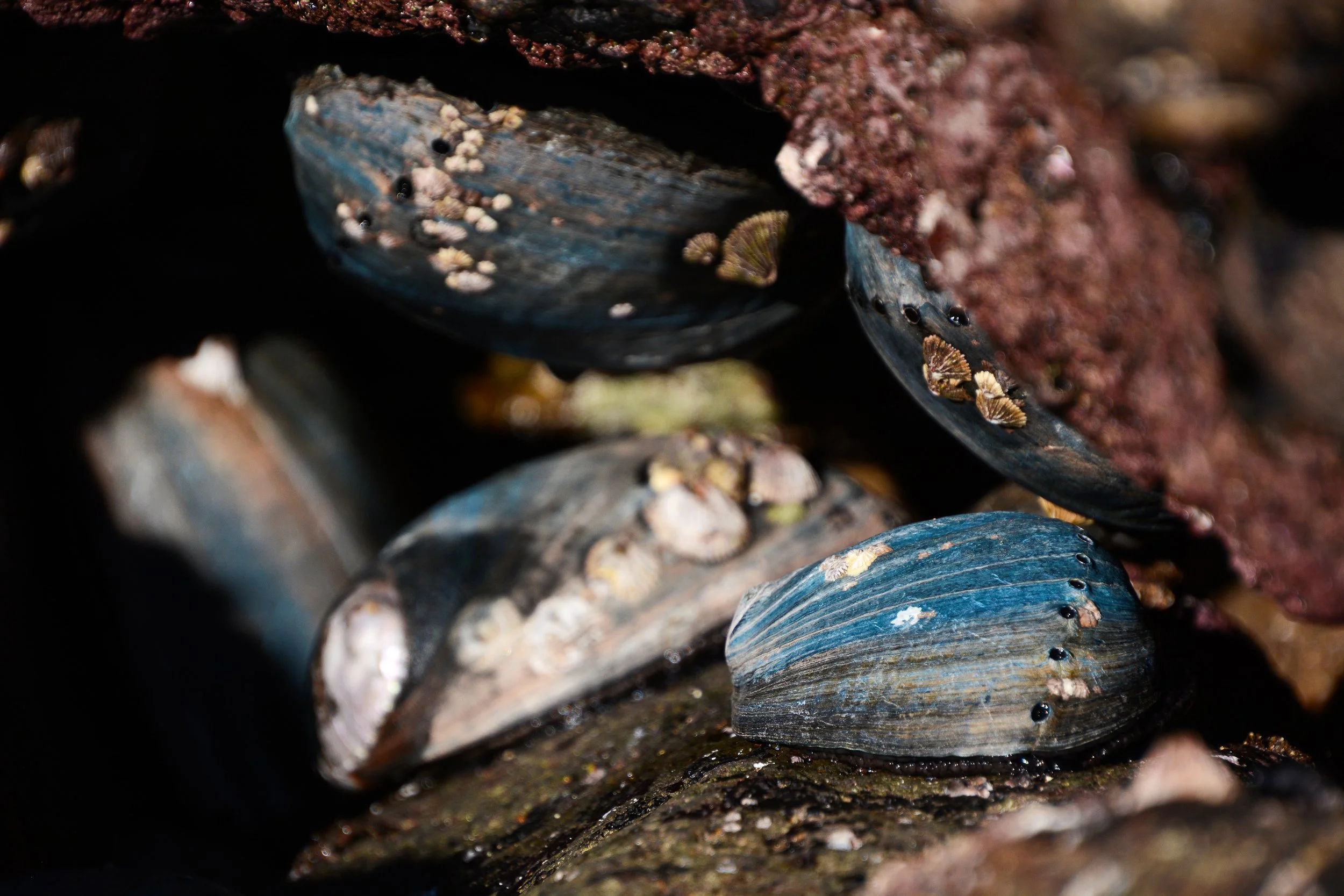
Restoring a Foothold
Contemporary human connections to abalone in California
By Marco Mazza and Reuven Bank
About the Exhibit
Since time immemorial, people and abalone have remained indelibly connected to each other along California’s coast. However, in the last few centuries, overharvesting, disease, and habitat loss have tested this bond and the resilience of these iconic inhabitants of our nearshore marine ecosystems.
In Restoring a Foothold, photojournalists Reuven Bank and Marco Mazza document how the contemporary relationship between people and abalone is evolving across our state. From the impacts of marine reserves on wild abalone in the Channel Islands, to the intricate partnerships enabling White Abalone restoration after decades of decline, this exhibit blends wildlife photography, citizen science, aquaculture, and restoration to open a window into the hopeful future of these marine snails and the communities who are connected to them.
Brought to you by Sunflower Star Laboratory, through the generous support of Steve Elkins, the exhibit will debut at the Channel Islands Maritime Museum in Fall 2026, before expanding across the California coast.
Citizen Science
White abalone (Haliotis sorenseni) are on the brink of extinction. Scientists need your help finding this critically endangered species in the Southern California Bight.
Finding Hal, a partnership between Aquarium of the Pacific, NOAA, and the National Marine Sanctuary Foundation, engages community members to help participate in citizen science efforts to monitor this species’ recovery.
Head to the link below to learn more about White Abalone, submit observations, or sign up for future monitoring dive trips in the Northern Channel Islands.
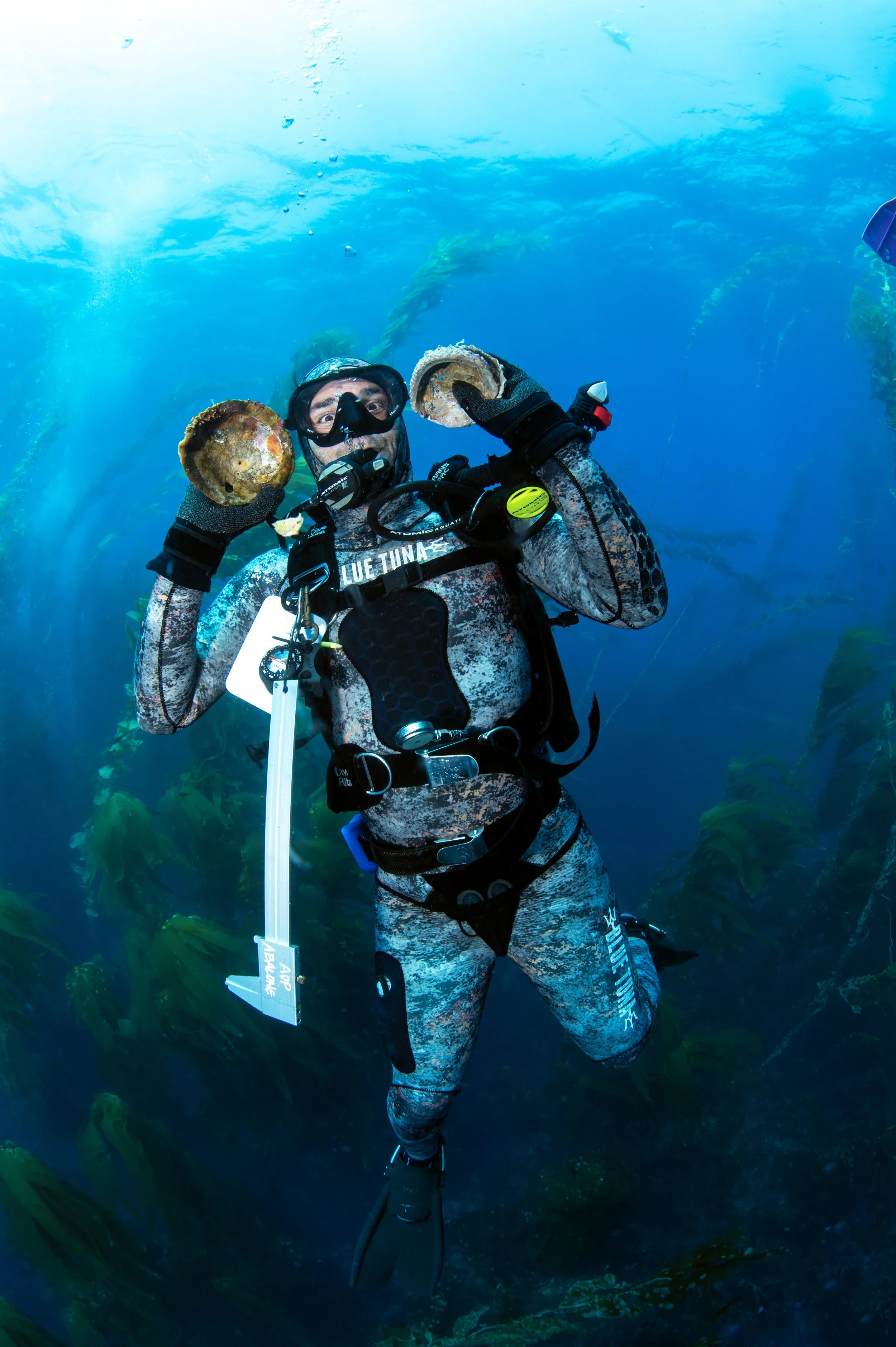
A citizen scientist holds up two abalone shells found during a Finding Hal monitoring trip to the Northern Channel Islands. Copyright Reuven Bank.
Spawning Hope
After a precipitous population decline from overharvesting and disease, 17 of the last white abalone in California were collected from a remnant population and brought to a land-based facility to breed.
In the decades that followed, the White Abalone Recovery Project, now headquartered at Bodega Bay Marine Laboratory, has worked to rebuild the white abalone population through conservation and recovery with partners across the state.
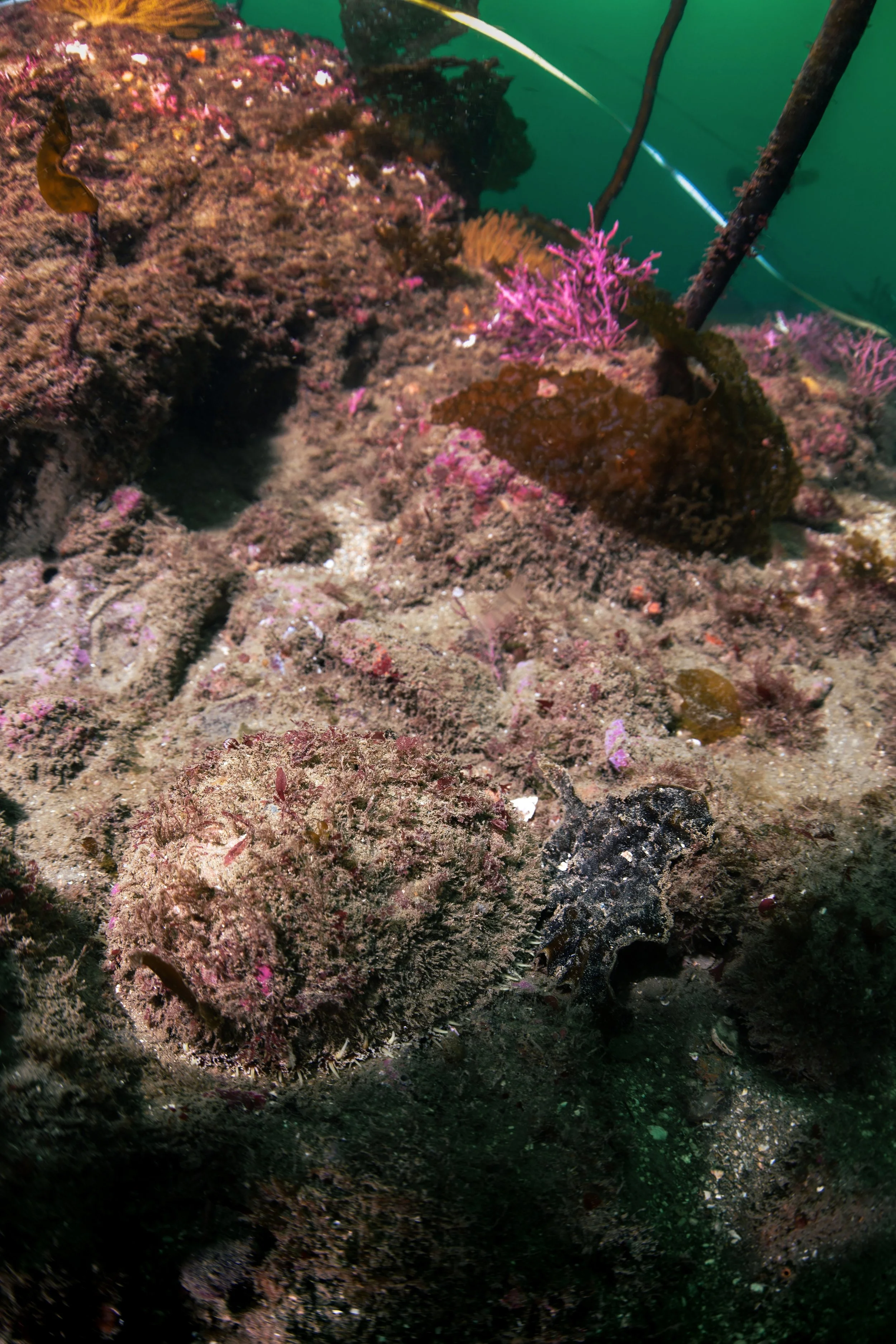
An adult wild white abalone is found during an outplanting of juvenile abalone in Southern California. Copyright Reuven Bank.
Abalone and Kelp Forests
Abalone are grazers who feed on marine algae such as kelp. In California, kelp forests are an essential habitat for abalone, offering a home and reliable conveyer belt of food drifting by to sustain their populations. Kelp also produces oxygen, sequesters carbon, supports ecotourism and fisheries, and creates habitat for thousands of species of marine life. Kelp abundance across California has declined precipitously, further reinforcing the connection between people and these iconic marine snails.
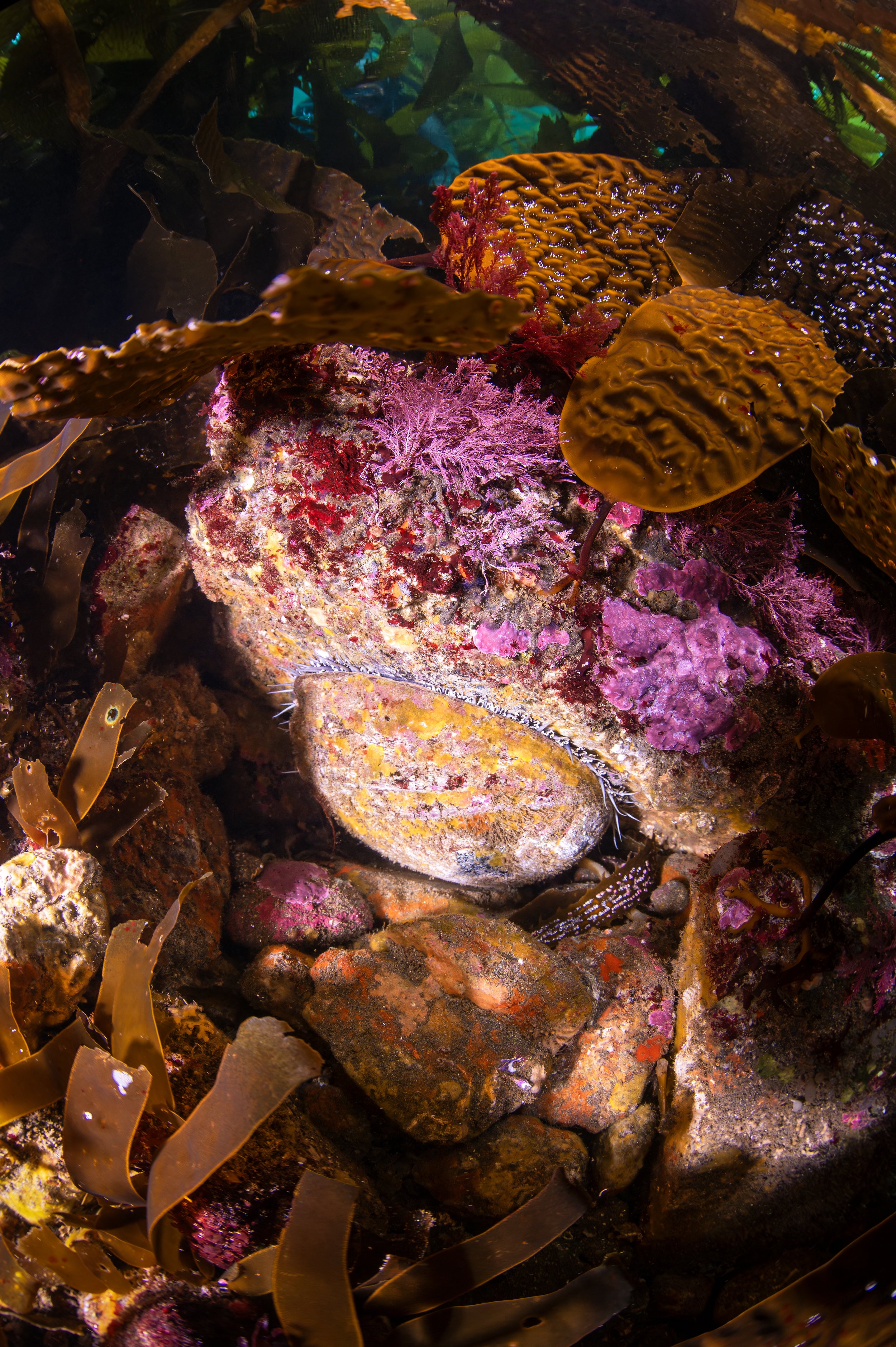
In Southern California, marine reserves protect keystone predators such as California spiny lobster and California sheephead, who maintain balance in kelp forest ecosystems by feeding on urchins and other native herbivores and preventing overgrazing. Decades of long-term data from the Kelp Forest Monitoring program demonstrate that kelp forests in the warmer water areas of Channel Islands National Park are healthier and more prolific inside of marine reserves. These reserves in turn support recovering populations of abalone, such as this green abalone surrounded by understory kelp off of Anacapa Island. Copyright Reuven Bank
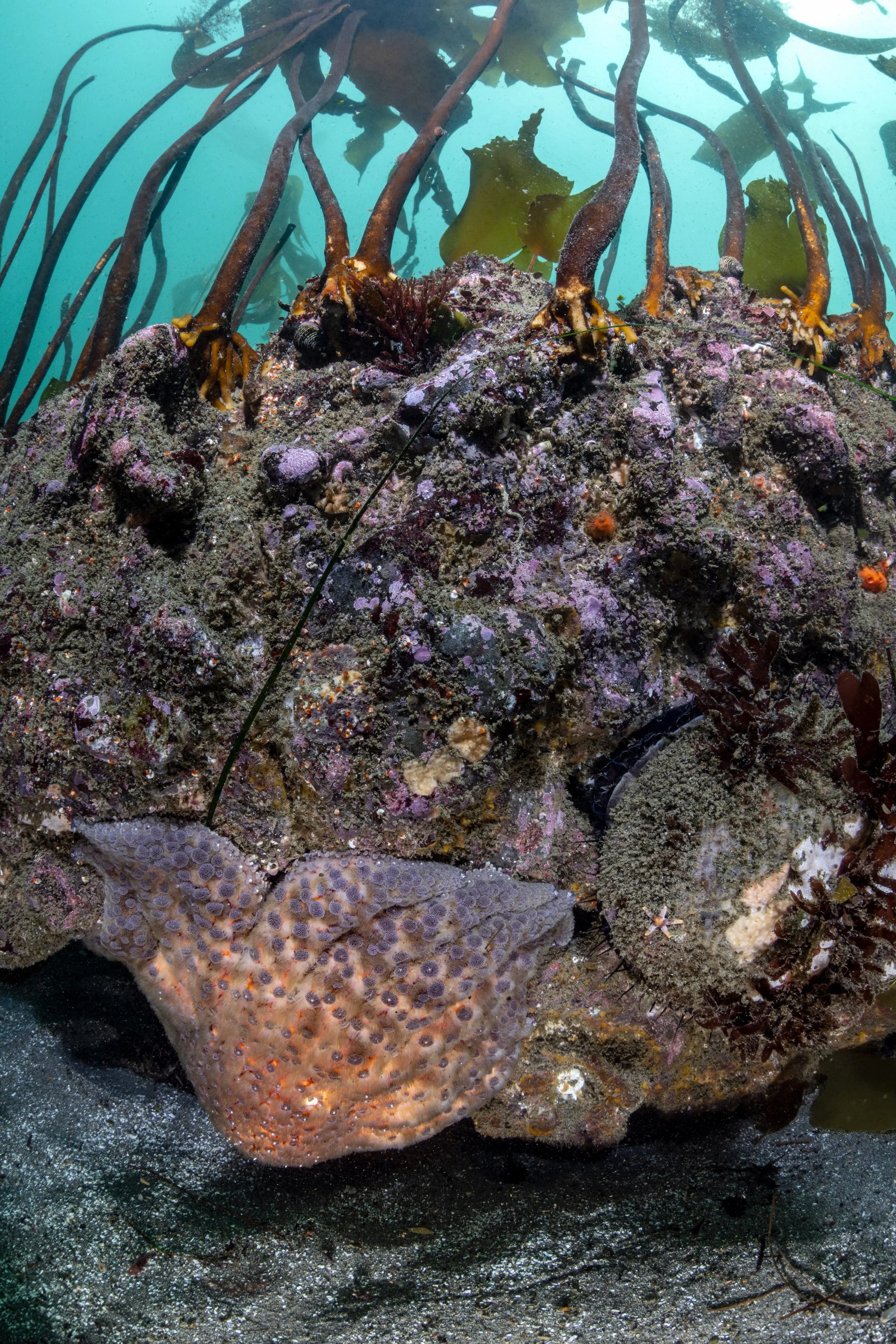
In colder water environments across California, sunflower stars and sea otters historically served as the keystone predators maintaining ecosystem balance. After fur traders nearly extirpated otters in our state by the 19th century, sunflower stars were the last remaining predator preventing broader ecosystem decline. When Sea Star Wasting Disease swept through sunflower star populations beginning in 2013, rendering them functionally extinct in California and Oregon, thousands of miles of Pacific coastline underwent a dramatic trophic cascade from urchin overgrazing. 95% of Northern California’s kelp has disappeared in the last decade. Copyright Marco Mazza.
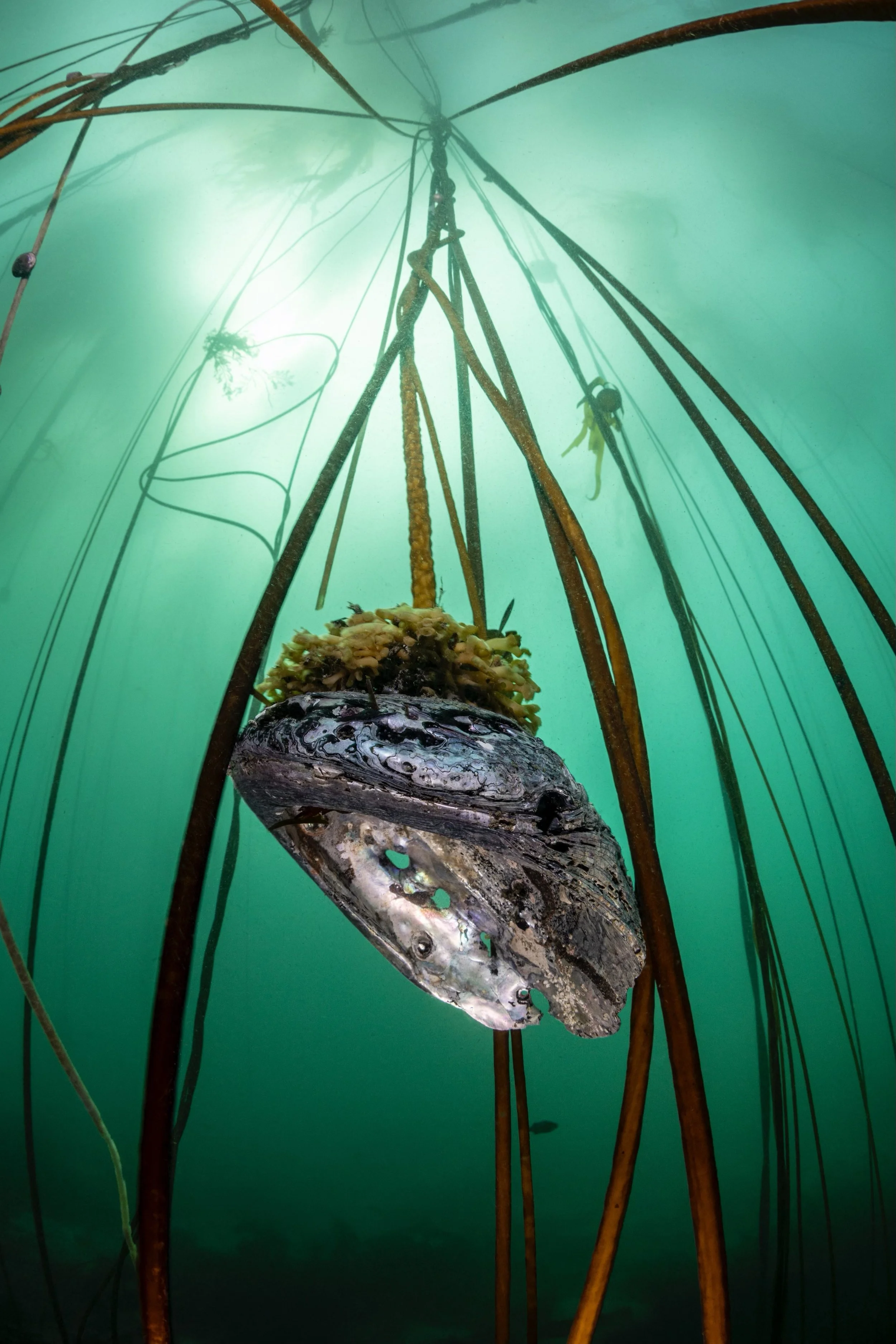
This kelp crisis has shuttered California’s last recreational abalone fishery and strained the connection between people and abalone in our state. In response, universities, nonprofits, tribal communities, and government institutions have rose up together to fight this decline. Through sunflower star recovery, kelp outplanting, and other efforts, a network of partners are working to restore our vital kelp forest ecosystems, and restore the relationship between people and abalone in the process.
Copyright Marco Mazza.